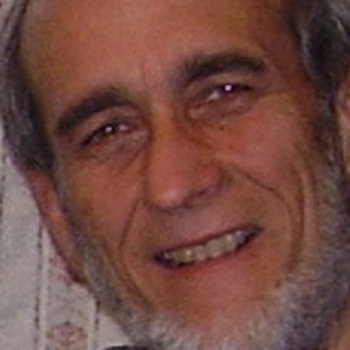
Imprisoned Black Panther Ed Poindexter has marked forty-eight birthdays in prison (credit: Omaha Police Department)
Edward Alan Poindexter was born November 1, 1944, in Omaha, Nebraska. Forty-eight birthdays have passed in prison as Poindexter, now 76, is two years short of a half-century locked up for a crime he says he did not commit. Poindexter and David Rice (later Wopashite Mondo Eyen we Langa) were convicted after a controversial trial for the August 17, 1970 bomb murder of Patrolman Larry Minard.
Leaders of Omaha’s Black Panther affiliate chapter, the National Committee to Combat Fascism, Poindexter and Rice were targets of COINTELPRO, a clandestine counterintelligence operation of the Federal Bureau of Investigation. The pair was arrested and prosecuted for murder in a trial marred by a missing 911 recording of a killer’s voice, contradictory dynamite testimony by two detectives, and planted dynamite particles.
During a prison interview with Nebraska’s most controversial prisoner, Poindexter complained of the confessed bomber’s lack of remorse and his disgust of Duane Peak’s attidude about the bombing that left five young children fatherless. Peak, after six different versions of the crime, implicated Poindexter in exchange for never serving a day in prison and laughed about the murder. Poindexter empathized with the five children of Minard as he lost his own father at an early age.
Ed’s father helped him learn to read. “I remember learning how to read by sitting on the floor between my father’s legs as he read the newspaper, and would point up to words and pictures that he would either read for me or explain what the photos were.”
“Daddy worked on the railroad. He must have really hated his job and the role he had to play for white folks because he would never talk about the job, and would always return at the end of the day so angry that we’d often clear the living room until Daddy had chilled out and read the papers.”
“One day I misread Daddy’s mood, and went to sit on the floor in front of him for my daily lesson in reading, but he slapped me up side of the head and yelled to leave him alone. I ran upstairs toward the bedroom crying and mumbling under my breath, “I hate you! I wish you were dead!”
“I think that was on a Friday, because the next morning was a Saturday when I awakened and went downstairs. There was that familiar but peculiar odor of grease-fried hair under a straightening comb. The living room was filled with neighbors, quiet and somber. They all spoke to me, but said nothing else. A couple of the women were crying.”
“I entered the kitchen for breakfast, and Aunt Alice was frying Mama’s hair. She did not mince words with me or sugar coat it with typical fairy tales, but instead told me directly, “Butch honey, your father’s dead. He drown at Carter Lake last night, and you are never going to see him again.”
“I was stunned. The searing pain and shock was unspeakable. I was only eight, and Daddy was just twenty-six, and I’d never see him again.”
“I’d wished him dead on Friday, and come Saturday morning he was dead. Actually, he drowned Friday evening late. I got my wish. I blamed myself for his death, and it took me nearly two years to come out of my guilt shell and begin acting like a normal kid again. It wasn’t until 1992 that I finally come to grips with the entire issue of my father’s untimely death that was probably driven by his alcoholism.”
“My Uncle Bob would come to Omaha about once a year to check on us. I remember one visit Uncle Bob said he would buy me anything I wanted. I thought for a long time, kids want a lot of things, but I didn’t want anything. I just wanted my father back.”
At his April 1971 trial, Poindexter testified he did not know officer Minard, had no ill will toward him, and had nothing to do with his murder. Poindexter and Rice were convicted by a jury that never heard the 911 recording that lured Minard to his death. Nor did the jury know the dynamite testimony was unreliable as post-trial revelations would show. Rice died in prison in March 2016. Poindexter, who has repeatedly been denied a new trial, remains imprisoned at the maximum-security Nebraska State Penitentiary serving a life without parole sentence.
Ed Poindexter has never wavered in his steadfast denial of any guilt or role in the Minard murder and continues to maintain his innocence. “I was unjustly accused of a crime I did not commit.”
The story of Ed Poindexter, the flawed investigation, prosecution, and trial is now available in my new book, FRAMED: J. Edgar Hoover, COINTELPRO & the Omaha Two story, in print edition at Amazon and in ebook format at Kindle. Portions of the book may also be read free online at NorthOmahaHistory.com. The book is also available to patrons of the Omaha Public Library.
Julian Lin spoke at a Roll Call Live special event after the 2016 election. Lin has been invited to the 2018 election show but will be unable to attend because of pending fraud charges in Taiwan. (Taiwan Civil Government)
David Meyers, Vice President of Congressional Quarterly Roll Call Live, has invited Julian Lin to Washington now that she is out of jail on bail in Taiwan. Unfortunately, the terms of Lin’s bond for fraud charges prevent international travel. Meyers wanted Lin back after her appearance in 2016 when Taiwan Civil Government sponsored a special election show for Roll Call Live to the tune of $20,000.
Meyers’ new invitation, on Fiscal Note letterhead, promised a “networking opportunity” with some of the “smartest minds in Washington.” The event, called “After the Races,” is scheduled for November 8 to take an “immediate look” at mid-term Congressional elections and how the results will impact “government spending and defense/foreign policy.”
Meyers did not ask for money so there will be no reserved table in the studio like last time when Lin welcomed attendees. In May 2018, Lin’s group, Taiwan Civil Government, was to sponsor a show featuring a Congressional panel discussion entitled “Reshaping the State Department, A Fresh Start with East Asia.” The program was canceled the day of the broadcast. Roll Call Live CEO Meg Hargreaves explained the cancellation, “This is due to the fact that two Members of Congress scheduled to appear at the event withdrew from the program.” Hargreaves declined to name the two Members of Congress who got cold feet.
The Roll Call Live show was two weeks after the arrest of Lin and her husband Roger Lin, TCG founder. Both Lins were being held incommunicado in solitary confinement. The Heritage Foundation went on with a TCG sponsored event on “Trade in Asia” the same day as the Roll Call Live show. However, Commerce Secretary Wilbur Ross was a last minute no-show when he was purportedly called to an urgent meeting at the White House.
Besides Roll Call Live, TCG sponsored or underwrote events for POLITICO, Foreign Policy, the McLaughlin Group, and Heritage Foundation. All have declined comment on Taiwan Civil Government sponsorship and all have refused to report on the May 2018 fraud arrests in Taiwan. The Lins and others are accused of masterminding a complex scam to dupe TCG members disgruntled by belief their money was donated for false connections to the United States government.
Republic of China in-exile authorities resist Roger Lin’s advocacy, maintaining it offers false promises and is a financial scam based on political ideology. Lin’s group was severely fractured several years ago with top leaders quitting over complaints about money. Held over four months in harsh pre-trial detention, Roger Lin came out of jail to a hero’s welcome at TCG headquarters where he now prepares for his defense.
The Taoyuan District judge who released the Lins on bail did so one week after TCG bought a full-page ad in the New York Times complaining about denial of bail. The New York Times is another media house that is quick to take TCG money but ignores a unique, international crime story drenched in politics.
Secret memorandum from the Omaha FBI office to J. Edgar Hoover reminding not to use a 911 recording because it might prejudice the police case against the Black Panthers (credit: Federal Bureau of Investigation)
October 1970 was a month of deception against local leaders of the Black Panthers by Omaha police and the Federal Bureau of Investigation. There were three consecutive days of deceit by police and the FBI as a plot to blame leaders of the National Committee to Combat Fascism for the bombing murder of Omaha Patrolman Larry Minard went forward. Edward Poindexter and David Rice (later Wopashitwe Mondo Eyen we Langa) led the Black Panther affiliate group and were targets of COINTELPRO, a clandestine FBI counterintelligence operation.
The plot to blame Poindexter and Rice began the day of the bombing, August 17, 1970, with a police decision to send the 911 recording of the anonymous voice that lured Minard to his death to the FBI Laboratory, but ask for no report. Deputy Police Chief Glen Gates conspired with Paul Young, the Special Agent in Charge of the Omaha FBI office, to keep lab results on the identity of the anonymous caller from being reported. An unknown killer upset plans to pin the murder on the two Panther leaders.
The pair were arrested and charged with Minard’s murder along with a teen, Duane Peak, who confessed to planting the bomb. Peak made a deal with police and prosecutors implicating the two leaders and escaped prison by being declared a juvenile delinquent. The plot to pin the crime on Poindexter and Rice hardened in October 1970 with false testimony to a Congressional subcommittee by an Omaha police captain and untruthful statements by FBI leadership to news reporters.
October 12, 1970, Williamsburg, Virginia
Assistant FBI Director William Sullivan spoke to a convention of United Press International editors and reporters. When asked about communist responsibility for racial unrest Sullivan admitted that no evidence existed of communist instigation of any of the riots that erupted in cities around the nation over the summer and instead blamed extremists.
“The vanguard of black extremism today is the Black Panther Party with its demonstrated proclivity for violence. The party was founded in 1966 ostensibly as a self-defense group against police officers. It has, however, been constantly on the offensive in keeping with its battle cry of “off the pigs”—Panther jargon for “kill the police”. According to Panther thinking, the police are the first target in the program for “liberation” of the black community and the violent destruction of white America.”
Sullivan’s speech included a denial of counterintelligence actions against the Black Panthers which he supervised. Sullivan also made the only public FBI mention of the bombing in Omaha. Sullivan didn’t have all of his facts correct, he was wrong on the date and number arrested and did not mention the duplicity of the FBI Laboratory for which he initialed his approval.
“On August 12, 1970, an Omaha, Nebraska, police officer was literally blasted to death by an explosive device planted in a suitcase in an abandoned residence. The officer had been summoned by an anonymous telephone complaint that a woman was being beaten there. An individual with Panther associations had been charged with this crime.”
The FBI continues to censor its files on the case. David Rice’s FBI file is filled with redactions including a completely censored three-page memorandum prepared for Omaha police by the local FBI office. Records of the Inspection Division, which reviewed actions of the Omaha field office on the case have disappeared, with the FBI unable to explain when or why the records vanished.
October 13, 1970, Omaha, Nebraska
In Omaha, Special Agent in Charge Paul Young sent a memorandum to J. Edgar Hoover on the Minard murder. Young reminded Hoover that no report from the FBI Laboratory was wanted: “In a preliminary hearing held 9/28/70 in Municipal Court, Omaha, PEAK testified that he had made the telephone call to the Omaha PD telling them that a woman was screaming in a house at 2867 Ohio Street. Police Officer LARRY MINARD was subsequently killed when a bobby trap suitcase exploded as he, with other officers, answered this call.”
“Assistant COP [Chief of Police] GLENN GATES, Omaha PD, advised that he feels that any use of tapes of this call might be prejudicial to the police murder trial against two accomplices of PEAK and, therefore, has advised that he wishes no use of this tape until after the murder trials of PEAK and the two accomplices has been completed.”
“UACB [Until Authorized to Contrary by Bureau], no further efforts are being made at this time to secure additional tape recordings of the original telephone call.”
Hoover had ordered no lab report was to be issued, however Assistant Special Agent in Charge Tom Dugan called the FBI Laboratory and canceled all testing, before Duane Peak was arrested, ending any inquiry into the identify the unknown 911 caller that lured Minard to his death. The FBI allowed a policeman’s killer to get away with murder and walk free in order to make a case against Poindexter and Rice.
October 14, 1970, Washington, D.C.
A House Internal Security Subcommittee hearing opened on “National Office Operations of the Black Panthers and activities in Des Moines, Iowa, and Omaha, Nebraska.”
The Omaha Police Department was scheduled. However, no FBI representative was on hand to testify. Captain Murdock Platner, who testified to a Senate subcommittee earlier in the month, returned to Washington to testify again. Platner read a written statement that elaborated on his earlier testimony.
“I will outline for you the development of the militant actions in Omaha that led up to the murder of a police officer. Eldridge Cleaver came to Omaha and spoke to about 400 people in a city park. Several Black Panthers from California were in Omaha at this time. One, Wilfred “Crutch” Holliday, stayed on in Omaha for some time. He attended Black Panther meetings and on one occasion, with 30 people in attendance, rushed out to his car and brought in a shotgun, and waving it over his head, shouted, “This is the way to handle the pigs; you should get yourself a shotgun and shoot as many as you can.”
Platner mentioned the 1969 shooting of fourteen year-old Vivian Strong and the spontaneous rioting that followed her death.
“The next night after the girl was killed rioting and burning started. Several businesses were burned out in the Negro area. This lasted for 3 days. During the entire week militants from other cities came to Omaha. This was established through informants and surveillance of autos with out-of-State plates that were spotted in the area….Cars from California, Wisconsin, Iowa, Indiana, Missouri, Kansas, and Colorado were in the area.”
“The militants obtained radios to monitor police calls. They had several people in cars with monitors, and every time a call was received by a police car in the Negro area a group of militants would show up and start interfering.”
Platner outlined the Minard murder investigation: “A 16-year-old Black Panther was arrested for the murder and implicated the deputy chairman, Edward Poindexter, and the deputy minister of information, David Rice, of the NCCF party, who were arrested and have been ordered to stand trial in district court for murder. Dynamite similar to that stolen from the Quick Supply in Des Moines was found in the home of one of the above. It is believed it is part of the supply from which the bombs were made.”
Platner explained Duane Peak provided the details of the bomb construction. Platner falsely described Peak’s testimony at the preliminary hearing and claimed that Peak said Rice supplied the suitcase and dynamite for the bomb: “I can tell you this, that one of the suspects in this, Duane Peak, a 16-year-old boy who was arrested, testified in a preliminary hearing, he testified that David Rice brought a suitcase filled with dynamite to his house or to somebody’s house. I am not for sure just which place; that they removed all the dynamite from the suitcase except three sticks; made the bomb, the triggering device, and so on, and put it together; and then packed the suitcase with newspapers and that he left with this suitcase.”
“Now I am a little bit hesitant to go into the rest of this because there is a trial yet to be held. I don’t know what I should say.”
Representative Richard Preyer thanked Platner for his testimony and revealed the shallowness of the subcommittee inquiry: “You have provided some of the most shocking and outrageous things here and yet you have done it in a perfectly calm manner and have not let your indignation carry you away and fly off the handle. Like good police officers you have stuck very close to the evidence and not jumped way beyond it. Most of the evidence you have recited here is circumstantial evidence, but as you know through experience in the courtroom there is nothing wrong with circumstantial evidence; it can be stronger than direct evidence.”
“So this circumstantial evidence here that you have received comes on pretty strong, the only shipment of this dynamite this year, and that sort of thing, it shows you certainly have prepared your case carefully and calmly and efficiently. So I say you are an example of the kind of police officer we need in this country. You are doing a good job.”
Poindexter and Rice were convicted in April 1971 after a controversial trial. Mondo, as Rice came to be known, died in March 2016 at the Nebraska State Penitentiary. Poindexter remains confined at the maximum-security prison where he continues to proclaim his innocence.
Taiwan Civil Government sponsored POLITICO’s Inauguration Hub party for Donald Trump and sought recognition from the new president but could not prevent being disowned by the United States. (credit: Taiwan Civil Government)
The ongoing story of Taiwan Civil Government and the fraud arrests of its leaders is like peeling an onion. Each layer reveals another underneath. The recent report that the exiled Republic of China fraud investigation began on Sept. 22, 2017, when Julian Lin returned from a trip to the United States, is only accurate as to surveillance. The investigation was already underway when TCG purchased a full-page ad in the New York Times to highlight Lin’s visit to the United Nations building.
On August 2, 2017, the Ministry of Foreign Affairs wrote to the American Institute on Taiwan inquiring about any official connection of Taiwan Civil Government and the United States. The AIT reply was sufficient to provide Taoyuan District prosecutors with probable cause to believe that fraud had occurred.
The early start date of the investigation, some four months before disgruntled TCG members came forward as complainants, raises questions about who ordered the probe and why. If prosecutors were already working on the case in July 2017, as seems likely based on the letter to AIT, then it was just weeks after a big TCG parade outside the Presidential Palace in Taipei.
The parade was a display of moxie and muscle and was replete with the Black Bear paramilitary squad, flashy color guards, and plenty of flags. Given the number of police that were involved in traffic control it is certain that the administration of Tsai Ing-wen was aware of Taiwan Civil Government’s desire to expel the ROC from Taiwan, the theme of the parade. Tsai has not made any public statement about the arrests of Roger and Julian Lin and others in May 2018 and remained silent about the incommunicado solitary confinement of the Lins.
The AIT response to prosecutors that TCG was not authorized by the United States could be a problem for Roger Lin, depending on what claims were made to disgruntled TCG members. However, there is one American agency that would not admit a link to TCG even if there was a connection, the Central Intelligence Agency.
Roger Lin has long hinted that he was backed by the CIA but always stopped short of giving details. Lin told Judge Yi-Shan Yao that he was visited last year by a mysterious American using an assumed identity. Purportedly the mystery man attended one of TCG’s weekly round table meetings. All the flag-waving and pro-American stance of the group is suggestive of a possible counterintelligence operation and TCG would certainly not be the first shadow government set up by the CIA.
However, proving the CIA helped establish TCG will be a task. If the CIA is involved, the spy agency might be content with leaving Roger Lin twisting in the wind rather than risk public exposure. If the CIA is not involved than Lin will be on his own defending accusations from unhappy TCG members.
Julian Lin’s visit to the United Nations and accompanying advertisement in September 2017 triggered surveillance by the Republic of China in-exile (credit: Taiwan Civil Government)
Although you haven’t yet learned about it reading the New York Times, a full page advertisement in the September 18, 2017 edition of the newspaper triggered undercover surveillance on the other side of the world. Julian Lin’s junket to New York City, where she attended a development meeting at the United Nations building, was accompanied by the full-page ad. Julian, wife of Taiwan Civil Government founder Roger Lin, is the group’s diplomatic face to the world. Julian is outspoken against the use of the name Chinese Taipei to describe Taiwan. Both Lins now face the possibility of long prison sentences for alleged fraud by the exiled Republic of China government they seek to expel from Taiwan.
The advertisement, timed for the opening session of the United Nations General Assembly, urged Taiwan’s membership in the international organization. TCG shelled out $114,437 to the newspaper for the space and another $3,525 to a pricey public relations firm for the ad design, for a total cost of $117,962.
The New York Times, considered by many to be the nation’s leading newspaper, was eager to take TCG money for the advertising income. However, editors have made sure the transaction was kept in the sales division and not transferred to a news desk. The newspaper has failed to print a single word about the arrests of its advertisers or the still being revealed story of TCG lobbying in Washington which scored a connection inside the Trump White House with presidential counselor Kellyanne Conway.
Roger Lin is accused of bilking money from donors in pursuit of political fiction. ROC prosecutors claim that Lin’s advocacy for a transitional United States military government is a hoax and that TCG identity cards and vanity license plates are not valid.
At the end of World War II the United States occupied Taiwan until October 1945 when the Navy’s Seventh Fleet landed battle-weary Kuomintang troops on the island, then called Formosa. The soldiers were supposed to be only there temporarily to process Japanese prisoners. However, the Chinese civil war got in the way and dictator Chiang Kai-shek was allowed to escape to Formosa in 1949 after his defeat by Communist revolutionaries led by Mao Tse-tung.
The United States refuses to recognize the Republic of China as a sovereign nation and conducts its “strategic ambiguity” foreign policy under a federal statute, the Taiwan Relations Act. The never-land that is Taiwan has been described by the District of Columbia U.S. Court of Appeals as “political purgatory” which urged then President Barack Obama to “expeditiously” resolve the island’s sovereignty, an action Obama never took.
The confused status of Taiwan, with both the People’s Republic of China and the Republic of China in-exile laying claim to sovereignty, has been fertile ground for a long suppressed Taiwan independence movement. A plethora of political parties and organizations have formed, each urging their own path to independence or statehood, as is the goal of several groups. Taiwan Civil Government formed ten years ago has become one of the most vocal with large rallies, parades, junkets, offices, lobbying in Washington, a magazine advertising campaign, and the full-page New York Times ad.
It was recently revealed in court documents that ROC surveillance of Taiwan Civil Government leaders began on September 22, 2017, the day Julian Lin returned to Taiwan from her visit to the United States. An undercover surveillance team watched Lin’s arrival at the airport and followed Julian’s car to the parking lot of TCG headquarters. The ROC probe was previously thought to have begun in December 2017 after disgruntled TCG “governor” Tsai Chou-peng purportedly visited prosecutors with a list of complainants. It now appears that Tsai did not trigger the investigation but instead made use of an ongoing probe that began as early as August 2, 2017.
The court hearing revealed the Lins have been treated much like political prisoners. The Lins were kept isolated with separate court appearances, held incommunicado in solitary confinement, in bare cells, and without bail. The hearings were held in a small courtroom which restricted the public to eighteen seats and required advance security clearance.
In a twist of irony, although it was a New York Times advertisement in 2017 that began trouble for Roger and Julian Lin, a second full-page New York Times ad in 2018, appealing for help from the United Nations, preceded by a week their release on bail despite prosecution objection.
Prosecutors have carefully avoided treason charges for creating a shadow government and portray the case as a financial crime. However, TCG’s notion that the Republic of China should be expelled from Taiwan is at the heart of the purported hoax, giving the case bad optics. The investigation that began with airport surveillance now promises to be a high-flying trial as Roger Lin explores the clouds of ambiguity that fog Taiwan’s status. This unique crime story is a long way from being over.
CORRECTION NOTICE: This article has been corrected with updated information pushing back the fraud investigation from Sept. 22, 2017 to August 2, 2017.
Michael Richardson pictured on a speaking tour about human rights in Taiwan (credit: Unknown photographer)
A Taiwanese friend tells me that I am the subject of unfavorable private remarks by some of the “elite of the Taiwan independence movement.” The cause of the commentary is my continued reference to “political fraud” in my reports on the prosecution of Roger Lin and others by the exiled Republic of China. My critics think I confuse financial crime with politics and give undue publicity to Taiwan Civil Government headed by Lin.
Because I admire and respect a number of leading activists in the Taiwanese independence movement I regret the private criticism and want to clear the air about my reports on the prosecution. Let me start by saying no one is ghost writing for me, I exclusively am to blame or credit. Secondly, no one is paying me anything and the articles are produced at my own expense. Finally, no one is telling me what to write, I am free of any censorship or direction.
My motives in writing about Taiwan are based on my concern about human rights and my recognition, as a United States citizen, that the seven decades of Taiwan’s unresolved international status have led to terrible crimes against the Taiwanese by the Chinese while America looked the other way. I don’t blame my country for the 228 Massacre but I do think American indifference to the White Terror period and the long years of martial law by the ROC brings shame. By installing Chiang Kai-shek and his regime on the island the United States created a problem it now cannot fix. In a democracy when the government does wrong it is the duty of the citizen to do right. Thus my reports are my personal effort to make amends for the harm my country allowed to happen.
I came upon the plight of Taiwan late in life as I was never taught one word about Taiwan in school or college. Nothing in history classes, nothing in geography classes, nothing in political science classes. Learning for the first time in middle age about the 228 Massacre and White Terror opened my eyes wide open.
My goal for Taiwan is self-determination. I want the people of Taiwan to decide their own fate, become masters of their own future. I support a referendum to decide. However, the referendum should be held by an international body, not just supervised or monitored, but actually conducted independently. Voting to be by secret ballot in neutral settings, no ROC buildings or election supervision. At least five options should be offered to island residents: Taiwan independence, United States statehood, Japanese reunification, Republic of China sovereignty, and People’s Republic of China control. One option that should be left off the list is the status quo. Taiwan’s unresolved status does not serve a good purpose, if it ever did. The “strategic ambiguity” brings instability to the region, deprives the Taiwanese of international participation, restricts economic prosperity and does not protect human rights.
Roger Lin will not get a jury trial for his alleged fraud. Why? Because the ROC does not believe in the jury system. The so-called justice system in Taiwan is deeply flawed.
Lin and others were held in harsh pre-trial detention. Bare cell without furniture, solitary confinement, no visitors, restricted access to medical care, and no bail. The conditions bring to mind the cruel punishment cell that former ROC President Chen Shui-bian was held in that broke his health.
Supposedly the purpose of pre-trial detention is to assure attendance at court dates. In Roger Lin’s case it served to portray him as a criminal, restricted his ability to defend himself, and gave him a strong dose of punishment—all without a trial or a chance to confront his accusers.
When the midnight raid took Lin from the comfort of home to his tiny cell the news media were there to record the arrest, tipped off no doubt by police or prosecutors. Published news reports quoted prosecutors that Lin was arrested for financial crimes based on political ideology. The premise is that Lin is a con artist pushing a political hoax.
I cannot overlook the fact that Lin’s group seeks to expel the exiled Republic of China from Taiwan making him an adversary of those in power. I will wait for the evidence. Until witnesses, subject to cross-examination, testify and their credibility can be weighed, I am going to extend to Roger Lin and the others the presumption of innocence.
Human rights are something that belong to everyone, including members of Taiwan Civil Government.
Roger Lin, founder of Taiwan Civil Government, was granted bail after four months of harsh pre-trial detention on political fraud charges (credit: Taiwan Civil Government)
Roger Lin, founder of Taiwan Civil Government, imprisoned on political fraud charges was freed on ten million yuan bail after telling a Taoyuan District Court judge that he was willing to be a martyr for Taiwan. Lin’s declaration, and plea in behalf of other TCG members, followed a full-page New York Timesadvertisement a week earlier calling on the United Nations to investigate the case.
Prosecutors of the exiled Republic of China, opposed bail and asked the judge to continue Lin’s four-month incommunicado detention in solitary confinement. Lin’s group seeks the expulsion of the ROC from Taiwan and wants United States supervision of a transition to sovereignty for the 23 million stateless island inhabitants. Taiwan’s longstanding “strategic ambiguity” and lack of sovereignty have kept it from membership in international organizations and increasingly called Chinese Taipei. Although the political overtones of the case are glaring, the prosecution of Lin has been ignored by both the Taiwanese independence movement and the American news media as prosecutors have portrayed Lin as a criminal mastermind.
Released with Lin was his wife Julian, also held incommunicado, on seven million yuan bail and Yu Hsiang-Ching onthree million yuan bond. The prison ordeal of the trio began in May with midnight raids followed by harsh detention in solitary punishment cells, without furniture, and no visitors. It took a court order to get medical treatment for Roger Lin, suffering from progressive prostate cancer. Julian Lin was kept from seeing her two adopted infant children. Mr. Yu, the 80 year-old landlord of TCG headquarters, suffering from multiple medical problems had significant weight loss during his confinement.
At a hearing on detention, Lin told the judge that even under the Kuomintang period couples were not held in custody at the same time. Lin pointed out there were two young children involved. Lin invoked the bond between mother and child.
Lin said the hateful treatment of Taiwan Civil Government defendants reminded him of the 228 Massacre and the White Terror period of the Kuomintang. The harsh treatment was designed to force a confession. “I am already prepared for Taiwan’s martyrdom, but please release two innocent people. The two of them do not understand Taiwan’s international status.”
While Roger’s attempt to shield his wife is understandable and it is easy to believe his scope of knowledge on the history of Taiwan’s “political purgatory” exceeds that of Julian, she has been actively speaking against Chinese Taipei and Taiwan’s lack of membership in the United Nations on TCG junkets to the United States. Such advocacy does not make Julian Lin innocent in the minds of ROC prosecutors.
When the Lins were released on bail they were afforded a hero’s welcome by TCG loyalists gathered to witness the release. Earlier, hordes of TCG members lined the halls of the Taoyuan District Court building for the hearing. Even though only eighteen members of the public are permitted in the small courtroom where the hearings are conducted, a long line of TCG members dressed in their black suits and lapel pins filled a corridor outside.
After a happy reunion with supporters at the jail Lin traveled to TCG headquarters where he convened a round table meeting to give thanks for donations and offer his vision of Taiwan’s future free of the exiled Republic of China. According to Lin the resiliency of the organization to stay strong following the fraud arrests shows the strength of the group’s message.
Lin supporters were able to raise over $600,000 in one day to meet the bail demands. The loyalists are a sharp contrast to the prosecution’s complaining witnesses. Although prosecutors boasted they had 315 complainants, the list of potential witnesses against the Lins has eroded to 66 disgruntled members who are unhappy about their TCG identity cards and vanity license plates according to news reports in Taiwan.
The prosecution of TCG’s leadership promises to bring Taiwan’s unresolved status, and America’s role in the situation, into court and provide Roger Lin an unintended soapbox to the world. Taiwanese independence advocates should pay more attention as TCG may find itself leading the march to sovereignty.
Some information in this report is from citizen reporter Lin Shan-feng who was present in the courtroom.
Taiwan Civil Government’s full-page New York Times advertisement in behalf of imprisoned leaders Roger and Julian Lin. (credit: Taiwan Civil Government)
In a bold and expensive move Taiwan Civil Government paid for a full-page New York Times advertisementto bring attention to the plight of group leaders Roger and Julian Lin. The pricey ad ran on Sept. 24, 2018 and was the second full-page pitch in a year. The first ad in 2017, when Julian Lin attended a meeting at the United Nations building, cost $114,437 with $3,525 for layout making a total of $117,962. Assuming the new ad was similarly priced means TCG has spent nearly a quarter-million dollars with the New York Times without a single word in print about TCG other than the ads.
Good journalism does not require the New York Times to publish gratis and favorable articles about its sponsors. Although, for a newspaper that prides itself on being an international publication and definitive news source, the self-censorship over the prosecution of its advertisers is a betrayal to readers. Few crime stories have such a rich mix of money, motive, international intrigue, and a White House connection. The political fraud charges against Roger and Julian Lin are newsworthy allegations and TCG’s inroads into Washington inner circles have a lot of media names involved. However, the fog of strategic ambiguity that surrounds Taiwan has clouded the editorial vision at the newspaper.
The ad is a plea, from jail. “My name is Julian Lin and my husband and I have been speaking around the world for the international recognition of Taiwan. Now we are in jail for our political beliefs and exercising our right to free speech. We urge the UN to examine our case and the political ambiguity of Taiwan. Allowing my husband and me to languish in jail over expressing a legitimate political belief and desire for self-determination undermines the very foundation of the United Nations. Please stay true to your charter—free Taiwan from political purgatory and us from behind bars!”
The New York Times could have assigned its international reporters to explain precisely what is Taiwan’s sovereignty status and why that matters. Sovereignty seems to be a central factor in the prosecution case with the exiled Republic of China prosecutors acting as though the island’s status has already been resolved.
A sidebar story on Roger & Julian Lin v. United States of America & Republic of China would have informed readers about TCG’s effort in District of Columbia federal court to undo the 1946 Nationality Act which deprived Formosans of their Japanese nationality. The law was passed in occupied Taiwan by the Republic of China without American permission. The case ended with a decision that the time to resolve that matter in court had long since expired. Julian Lin was asked to account for her role in the District of Columbia lawsuit by the ROC judge hearing the political fraud case.
The New York Times political reporters would have numerous Washington insiders to interview to uncover the web of connections that Taiwan Civil Government was building. A spokesman for the Heritage Foundation called TCG a good partner while the editor of Foreign Policy was quick to swap cards with Julian Lin. Kellyanne Conway, Counselor to the President, got smiley face with Lin at a POLITICO Powerlist reception and Julian bumped noses with Trent Lott at a Roll Call Live special event.
The newspaper’s crime reporters could have explored the actual allegations against Roger and Julian Lin and interviewed complainants. The financial desk is well equipped to follow the money and there are supposedly millions of dollars to track. Finally, the editorial page could have put everything in context. Instead, the New York Times readers are left clueless and reporters who spotted the ad are told to continue to sit on their hands.
Was the money well spent? One informed opinion in Taiwan says no, the faraway ad in English will not have any influence on a court which speaks Chinese. An alternative view is that perhaps the advertisement will break the American media whiteout on the case but the lack of response by the New York Times is not a good sign.
Meanwhile, Julian Lin sits in a bare cell, in solitary confinement, denied any visitors, and even forbidden to see her two young children, ages one and three years old. Lin may be a fraudster, however, she is being treated like a political prisoner.
Sixteen year-old Duane Peak changed his story on September 28, 1970 after being threatened with the electric chair and implicated two Black Panther leaders in a murder he earlier said they were not involved in. (credits: Unknown photographer/Court exhibit)
The Omaha Municipal Court preliminary hearing for Ed Poindexter and David Rice (later Wopashitwe Mondo Eyen we Langa) was called to order on September 28, 1970. Both defendants asked their murder cases be severed and tried separately but were denied. County Attorney Donald Knowles and Arthur O’Leary represented the prosecution, Public Defender A.Q. Wolf and Thomas Kenney represented Poindexter, with David Herzog representing Rice.
The two men were leaders of Omaha’s affiliate chapter of the Black Panther Party called the National Committee to Combat Fascism. The pair were charged with the bombing murder of Omaha Patrolman Larry Minard, Sr. on August 11, 1970. Peak confessed to planting the bomb and after six versions ended up implicating the Black Panther pair during his preliminary hearing testimony, however only after contradicting himself.
Thomas Kenney later described the hearing held at Omaha City Hall. “It was a few blocks from the Courthouse, but the preliminary hearing was a real circus. There was a mob of people there, and screaming and hollering. There were mobs of people, news media, pro-police factions, you know, a number of black people.”
David Herzog began by immediately objecting to any testimony by Peak because he was a co-defendant, unreliable, and a minor. The judge overruled the objection stating he did not know anything about Peak.
Arthur O’Leary asked Peak about seeing Ed Poindexter a week before the murder. Peak couldn’t remember. “I don’t think I remember seeing him.”
Peak also couldn’t remember seeing Poindexter at the American Legion on the Friday before the bombing as he earlier claimed. Peak couldn’t remember giving a deposition to O’Leary a month earlier where he purportedly did remember. Nor did Peak remember giving O’Leary a statement during an interrogation a week earlier.
County Attorney Donald Knowles had enough and stopped the questioning. “I note, Your Honor, from looking around the courtroom, that this witness’ lawyer is not here. I would like your permission for a continuance to the time that we can get his lawyer here. I think he should be here with him.”
When the preliminary hearing resumed in the afternoon, Knowles made a statement, apparently because Peak was still not ready to cooperate with the prosecution. “I understand that the Court’s ruling was that we were allowed to withdraw the witness that was on the stand this morning due to the fact that he had taken us by surprise and we are allowed to proceed now with other witnesses.”
Finally, in mid-afternoon, Duane Peak returned to the witness stand, wearing sun glasses. The Omaha World-Herald reported that Peak’s hands trembled and his answers were whispers.
Nebraska State Senator Ernie Chambers interviewed Peak years later about the case and that day in court. Peak described removing his sunglasses upon instruction from the judge at the preliminary hearing. “The stress and the pain and all that I went through, it showed in my face.”
“If you had known, you could have felt the inside of my heart, you know, it just like someone took a big bass drum and took it inside me and just started beating away. You know, I could feel like…uhh…as I sat on the witness stand, my heartbeat. I felt that everyone could see my entire body pulsating, you know. The way my heart was beating and I was under a lot of hurt and I was under a lot of stress. I had a big concern for my family. I didn’t want to see my family suffer for anything they had nothing to do with, and that was very important as well.”
Peak admitted conferring with three people during the morning recess; his lawyer, his brother Donald, and his grandfather, Foster Goodlett. Objections were made against any further testimony by Peak because of the visits. The judge allowed Peak to testify. “The young man is represented by competent counsel and I don’t know what he advised him but he has been represented and he has also conferred with his grandfather, who is a minister and whom I have known for a long time and I don’t know what advice he gave him but your motion is overruled and we will see what the defendant testifies to.”
Unknown to the defendants or their attorneys, Donald Peak was a paid FBI informant who reported to Special Agent in Charge Paul Young and later to prosecutor O’Leary. Poindexter and Rice were targets of the clandestine COINTELPRO counterintelligence operation and the subject of FBI Director J. Edgar Hoover’s personal attention. Donald Peak’s visit with his brother during the recess carried with it COINTELPRO taint.
Peak’s testimony changed during the recess. Now Peak remembered a conversation outside NCCF headquarters with Ed Poindexter about a bomb. “He called me outside and said he wanted to show me how to make a bomb.”
Peak said Poindexter told him to meet that evening at Frank Peak’s house. “He met me there with Rollie House.”
Duane claimed that from Frank’s home he went with House and Poindexter to Mondo’s residence where Poindexter got out of the vehicle. “We went up to Rollie House’s house. Rollie brought a suitcase out from the house.”
Peak said House returned him to Mondo’s home where Peak claimed that Poindexter opened the suitcase to reveal dynamite. “Poindexter took the dynamite out of the suitcase and put it in a box.”
Peak’s story about construction of the bomb changed from his earlier versions. Peak said he and Mondo assisted Poindexter. Peak also said that Poindexter wanted to plant the bomb that night but couldn’t get a ride. According to Peak, at an encounter with Poindexter about 11:00 p.m. on Friday night at the American Legion Club, Peak was instructed to deliver the bomb to a vacant house on Ohio Street.
Peak gave yet a different version of the bomb construction to Ernie Chambers. “That thing was made in David’s basement. It was his basement.” Peak denied witnessing the construction of the bomb. None of Peak’s earlier versions of the crime supported his new claim to Chambers that the bomb was assembled outside his view in Mondo’s basement. At trial, the bomb was allegedly assembled by Poindexter in the kitchen while Peak watched on.
Peak said he retrieved the suitcase and took it to Olivia Norris’ house where he told his brother Donald to stay away from the suitcase. From there Peak took the suitcase to sister Delia’s apartment with sister Theresa giving him a ride.
Under cross-examination by Thomas Kenney, Peak admitted telling the police a different story when first questioned. Peak said he was threatened with the electric chair during his first interrogation.
David Herzog asked Peak about his arrest. Peak said he was taken to the police station where he met with police officers and one other person. “There was one from the FBI.”
“The FBI arrested me,” testified Peak.
Peak said police twice talked to him about being executed in the electric chair. “They said I was sitting in the electric chair so I had better tell the truth.”
“I didn’t have a chance.”
Peak admitted he had been coached about his confession by Arthur O’Leary in preparation for the hearing. Peak said his attorney was not present for the session with O’Leary. Herzog asked Peak to remove his sunglasses. Ernie Chambers was there and described the scene in an interview. “When he came back in the afternoon, his face was swollen around his eyes, he had glasses on….When Duane took his glasses off his eyes were red, you could see he had been crying, and there was an audible gasp in the courtroom.”
“His answers were scarcely audible. A young man who knew nothing about anything in the morning and suddenly gave the answers that the police, the prosecutors needed to implicate David and Ed.”
Kenney asked for a dismissal of the charges. “Your Honor, the case that the State has presented thus far was the testimony of a 16-year-old boy who admittedly was subjected to extensive psychological coercion on the part of the Omaha Police Department and therefore is unreliable.”
Herzog also sought a dismissal. “The witness has changed sides; has altered his story; has forgotten, claims to have forgotten some facts, and then comes back this afternoon and offers that testimony at the State’s own request and that witness has now impeached himself.”
“The confession itself or the statement here is of an unreliable nature; obviously coerced; obviously given under fear by the statement of the witness himself. He indicates he would give the police officer or police officers anything they wanted.”
The case was continued to trial where in April 1971 the FBI obtained the conviction they sought. Peak stuck to his story, got his deal and never spent a day in prison. Raleigh House was never charged for allegedly supplying the suitcase and dynamite for the bomb. Rice was convicted and died at the Nebraska State Penitentiary in March 2016. Poindexter remains behind bars at the maximum-security prison where he continues to proclaim his innocence.
The day after the preliminary hearing Peak wrote to Olivia Norris, a family friend, from his jail cell that he betrayed “two bloods” and deserved a life sentence or execution. The letter, censored by the jail staff, was shown to prosecutors but kept from the defense.
Julian Lin and Trump counselor Kellyanne Conway at POLITICO Powerlist media event in 2017 (credit: Taiwan Civil Government)
In a dramatic moment at her preliminary hearing on Sept. 13 in Taoyuan District Court, Julian Lin stated her overseas trips for Taiwan Civil Government resulted in a personal connection at the White House with Trump counselor Kellyanne Conway. Lin, now confined to solitary confinement without visitors, is charged with participation in political fraud against TCG donors. An acquaintance with Conway’s kind of clout could be viewed as exculpatory evidence against scam charges giving the case definite political overtones. Taiwan Civil Government has been seeking United States assistance to expel the exiled Republic of China. ROC prosecutors claim that TCG was conducting a hollow effort to gain donations from members.
Judge Yi Shan Yao asked Lin if she contacted officials when she lead TCG delegations abroad. Lin answered, “Yes, like Conway, she is the campaign manager of President Trump, now the highest advisor to the White House. There are also other contacts.”
The long standing strategic ambiguity that fogs Taiwan’s international status, called “political purgatory” by the District of Columbia federal appellate court, has mixed a devil’s brew. The confused status of the island, variously known as Formosa, Taiwan, the Republic of China, or Chinese Taipei has created a rainbow of Taiwanese independence organizations. One of the most controversial, and successful, is Taiwan Civil Government, founded by Julian’s husband, Roger Lin, also being held in harsh pretrial detention, on the floor in a bare cell with no visitors or contact with the outside world.
Julian Lin denied any fraudulent conduct at her preliminary hearing. Lin told the judge that most of the complainants were TCG members before her and that she could not be defrauding them because they agreed before she joined. Lin said the complainants all voluntarily applied for TCG identity cards and attended classes because of the TCG message.
Lin testified upon questioning that she had favorable experiences using the TCG identity card at the airports with Customs by courteous reception and that it was accepted as valid identification at the United Nations where she used the card to enter the building. Lin was asked for details of her use of the TCG identity card. Lin said “flying to the United States as long as the name on the ticket is the same as the name on the Taiwan Government’s identity card, you can directly use the Taiwan Government identity card without the ROC passport” to board the plane.”
“With the ROC passport, plus my useful identity card and invitation letter from the Taiwanese Government, I got a quick customs clearance. I originally lined up with the general tourists. When I showed the identity card and invitation letter of the Taiwanese Government, the Customs let us take the clearance through the official door.”
The presiding judge asked about the invitation letter. Lin answered it was for an event at the Four Seasons Hotel. Lin has been to two different events at the fancy hotel, a reception for the opening of a TCG office in Washington and later for a RightNow breakfast with Kelleyanne Conway. It is not clear from her testimony which event the invitation letter was about.
Lin said her speeches on her trips were appeals for international help about the statelessness of the Taiwanese people and a desire to normalize relations for the island.
Lin revealed that she is wealthy from her family. The 134 million yuan seized in a May 2018 raid was hers from the 350 million yuan premarital assets that belonged to her before her 2012 marriage to Roger Lin Julian claimed the money, stacked at home in cash, was hers legally. Prosecutors allege that Lin’s premarital assets were only 50 million yuan and the difference is criminal gain.
The judge asked Lin what her position at Taiwan Civil Government was to which she replied she was only a volunteer. Lin was then asked about leading teams abroad and answered she was participating in free speech as a Taiwanese. Asked if she did diplomatic work Lin repeated she was only a volunteer.
Lin explained the TCG decision-making process as being guided by weekly round table meetings. Lin said she sometimes participates when invited. She would facilitate payments when authorized by the round table group and approved by Roger Lin.
The judge asked Lin if she was a plaintiff in Roger and Julian Lin vs. USA and ROC. Lin replied she was on advice of an American attorney. The case brought in District of Columbia federal court sought to overturn the 1946 Nationality Act which deprived Formosans of their Japanese citizenship. A federal appellate court later ruled the statute of limitations had run out on the post-World War II action by the ROC to consolidate its hold on Formosa.
The judge wanted to know more about Julian Lin’s trip to the United Nations, promoted in a full-page New York Times advertisement. Lin answered, “I personally took the identity card of the Taiwanese Government and exchanged identification cards and entered the security check of the United Nations.”
The judge asked why Lin was invited to a meeting at the United Nations building. Lin explained TCG has been working hard to gain acceptance. The UN invite came through the efforts of Global Vision Communications. “In the United States, political activities must be carried out through public relations companies,”said Lin. Neil Hare, head of GVC is TCG’s chief publicist and spokesman in the United States.
Lin volunteered she had also used the TCG identity card as identification to enter the National Press Club. Lin said an “American lawyer” arranged with the National Press Club to accept the TCG card as valid identification.
The judge asked about a statement Lin made during her interrogation that TCG was approved by the Department of Justice. Lin did not recall making the statement although she said something similar at the TCG news conference held at the National Press Club. Lin was referring to TCG’s compliance with the Foreign Agent Registration Act enforced by the Department of Justice. Although FARA registration does not constitute approval it is evidence of recognition of TCG as a foreign entity.
The judge asked about GVC and its officers. Lin replied she had no current information. Given her incommunicado imprisonment the judge accepted that answer but probed into banking. Lin said she had a Bank of America account in Hong Kong unavailable to TCG and a second account which she would write checks for the group in exchange for cash. Lin would get reports from the round table decision group “that it is difficult to send money to the United States, I will help.”
Lin told the court that neither she nor Roger Lin had a salary. Lin reiterated the seized money was hers.
“It’s all my money. My family’s money won’t be all in the bank. This is my father’s teaching. I myself have a lot of money.”
Lin’s legal team took over and foretold the upcoming defense strategy. Julian’s lawyers are Li-Jung Huang, Hui-Min Huang, and Cheng-Chen Chiang. The argument is the ROC Constitutiongives the people freedom of speech and freedom of assembly and association. Taiwan Civil Government’s exposition, whether the San Francisco Peace Treaty handed over Taiwan to the ROC, or US military occupation, is a political proposition and should be protected by freedom of speech.
Further, out of more than 38,000 members of TCG only sixty-six are complaining witnesses, less than two-thousandths of the total membership. The use of a fraud charge is improper and Lin should be released for want of a crime.
Lin’s lawyers complain of the propaganda employed against their client and that she has been called a Chinese mole, the “Black Rose” and the “Empress Dowager” to discredit her. They argue that Julian is a native Taiwanese and that it was not criminally wrong for her to marry Roger Lin and it is not wrong for her to have wealth.
Finally, it was pointed out to the court that there are two young children in need of care by their mother. Roger and Julian adopted two babies now a three year-old boy and a one year-old girl. The children were briefly displayed in the courtroom doorway provoking the imprisoned mother to lose her composure and cry. The small courtroom filled with sorrow as TCG supporters all burst into tears with Lin in a sad, somber moment.
Julian Lin continues to be held incommunicado in solitary confinement because she is a presumed flight risk and might send a message to supposed fraud confederates. It is hard to see how the two infant children could aid Lin in an escape or communicate to TCG members. The four month ban on seeing her children is stark proof that talk of expelling the ROC comes with a heavy price.
After the short hearing, Lin was shackled and returned to her lonely isolation in a bare cell. Julian’s punishment has already begun.



 Richardson Reports